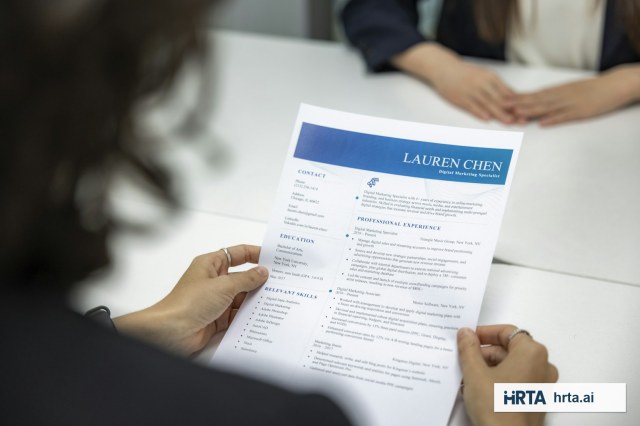
Gulf recruiters scan for different things than Pakistani employers: nationality, visa status, notice period and attested qualifications. Here is the CV format that gets shortlisted in Dubai, Doha and Riyadh.
A recruiter in Dubai, Doha or Riyadh may receive hundreds of applications from more than twenty countries for a single role. They shortlist fast, often spending less than a minute on each CV, and they look for information that a Pakistani or Western CV often leaves out. Get the format right and your experience gets read; get it wrong and a strong candidate can be rejected in seconds.
This guide explains exactly what Gulf recruiters expect, section by section, with country-specific notes for the UAE, Saudi Arabia and Qatar.
The recommended Gulf CV structure
- Name and personal details
- Professional summary
- Core skills
- Work experience (most recent first)
- Education and attestation status
- Certifications and licences
- Languages
- References (optional — "available on request" is fine)
1. Personal details: more than you are used to
Gulf CVs normally include personal information that is optional elsewhere, because it directly affects visa sponsorship, relocation cost and how quickly you can start:
- Full name exactly as it appears on your passport.
- Nationality (both, if you hold two).
- Current location and visa status — for example, "Lahore, Pakistan — available to relocate" or "Dubai, UAE — residence visa, transferable".
- Notice period or the date you can join.
- Phone number with the country code (+92 or +971), noting if it is on WhatsApp.
- A professional email address and your LinkedIn URL.
- Driving licence — mention a UAE, Saudi or other GCC licence prominently, as it is a genuine advantage for sales, field and supervisory roles.
Date of birth and marital status are still common on Gulf CVs, partly because they affect family visa and accommodation arrangements, but they are optional. Include them if the advertisement asks or if they strengthen your application.
2. The photo question
Many regional and local employers still expect a photo, especially for customer-facing jobs in hospitality, retail, sales, aviation and healthcare. Multinationals and free-zone companies are less concerned and may prefer no photo. If you include one, it must be a recent, professional headshot with a plain background and formal clothing. Never use a selfie, a wedding photo or a cropped group picture — an unprofessional photo does more harm than no photo at all.
3. A summary written for the role
Open with three or four lines that answer the recruiter's first question: can this person do this job, here, soon? Mention your title, years of experience, your strongest specialisation, relevant standards or licences and your availability. For example:
"Civil engineer with 7 years in high-rise and infrastructure projects, including 3 years on a Riyadh metro package. PEC registered, Saudi Council of Engineers accredited, experienced with Aramco standards. Available to join within 30 days."
Avoid empty phrases such as "hard-working team player seeking a challenging position". Every word in the summary should be specific to you.
4. Core skills
Add a short list of eight to twelve skills taken from the job advertisement and your real experience — software, tools, methods and standards. For an accountant this might read: IFRS reporting, SAP FICO, VAT compliance, month-end close, budgeting, Excel modelling. This section helps both applicant tracking systems and busy recruiters see your fit at a glance.
5. Experience that proves Gulf readiness
List your roles in reverse-chronological order. For each one, give the company, city and country, your title and dates, then three to six achievement bullets. Gulf employers particularly value:
- Project names and values ("SAR 120m hospital project"), client names where you are allowed to share them, and team sizes you managed.
- Experience with international standards — ISO, IFRS, JCI, NEBOSH, PMP or vendor certifications.
- Any previous GCC experience, even short assignments, because it reduces the risk for the employer.
- Results with numbers: costs saved, revenue grown, deadlines met, safety records maintained.
Compare these two bullets for a sales role. Weak: "Responsible for handling corporate clients." Strong: "Managed 45 corporate accounts in Karachi and grew annual revenue from Rs 80m to Rs 112m in two years." The second version gives the recruiter something to believe and remember.
6. Education and attestation
List your degree, institution and year of graduation. If your degrees are already attested — by HEC, the Ministry of Foreign Affairs and the relevant embassy — say so. A line such as "Degree attested for UAE employment" saves the recruiter a question and can shorten your visa timeline by weeks. If attestation is in progress, mention that too.
7. Certifications and licences
Regulated professions need a Gulf licence before they can work, so recruiters check this section carefully. Healthcare professionals should state their licensing status with the relevant authority — for example DHA, DOH or MOHAP in the UAE, the Saudi Commission for Health Specialties in Saudi Arabia, or Qatar's healthcare practitioner licensing department — and whether primary-source verification, often through DataFlow, has been completed. Engineers should mention Saudi Council of Engineers accreditation or UAE engineering registrations where relevant.
8. Languages
List English, Urdu and any other languages with an honest level. Even basic Arabic is worth mentioning, as it helps in customer-facing roles and shows commitment to working in the region.
Country-specific notes
United Arab Emirates
The UAE market is highly international. Multinationals in Dubai and Abu Dhabi often prefer a clean, photo-free CV that is close to international style, while regional companies still expect fuller personal details. Visa status and notice period are the two items recruiters ask about first.
Saudi Arabia
Saudi employers place strong emphasis on relevant experience, attested qualifications and professional accreditation. Large employers and government-linked companies often require specific standards, so naming them helps. Note that some roles are reserved for Saudi nationals under Saudisation rules, so focus on occupations open to expatriates.
Qatar
Qatar's market is smaller but competitive, with strong demand in construction, hospitality, healthcare and energy. Recruiters value Gulf experience and clear availability dates, and many roles are filled through established recruitment agencies.
Make it ATS-friendly
Large Gulf employers and recruitment agencies use applicant tracking systems to filter CVs. Use a single-column layout, standard headings, no tables or text boxes, and save as a PDF or Word file as requested. Mirror the exact job title and key skills from the advertisement. Read What Is an ATS? for the full checklist.
Length, language and file naming
Two pages is right for most professionals; three is acceptable for senior or highly technical roles with many projects. Write in clear, simple English, keep the spelling consistent, and remove anything that does not support the role. Name your file professionally — "Ahmed-Raza-Civil-Engineer-CV.pdf", not "CV final new 2.pdf" — and when emailing, use a subject line with the job title and reference number.
Common mistakes Pakistani candidates make
- Sending one generic CV to every Gulf job instead of tailoring the summary and skills.
- Leaving out visa status and notice period, so the recruiter has to guess.
- Listing duties ("responsible for site supervision") instead of results.
- Using a heavily designed template that ATS software cannot read.
- Including an old, informal or poorly lit photo.
- Claiming certifications or licences that are not yet complete.
Build your Gulf CV in minutes
The HRTA CV Builder is free and includes the personal-details fields Gulf recruiters expect, a clean ATS-friendly layout and AI help to tailor your CV to each advertisement. When it is ready, browse jobs in UAE, Qatar and Saudi Arabia and apply with one click, and read our Gulf interview tips to prepare for the next step.
Follow HRTA
Get new jobs, career tips and hiring insights as soon as they are published. Follow HR Talent Arena on LinkedIn, Facebook, Instagram, X (Twitter) and YouTube, and join our WhatsApp channel for daily job updates.